






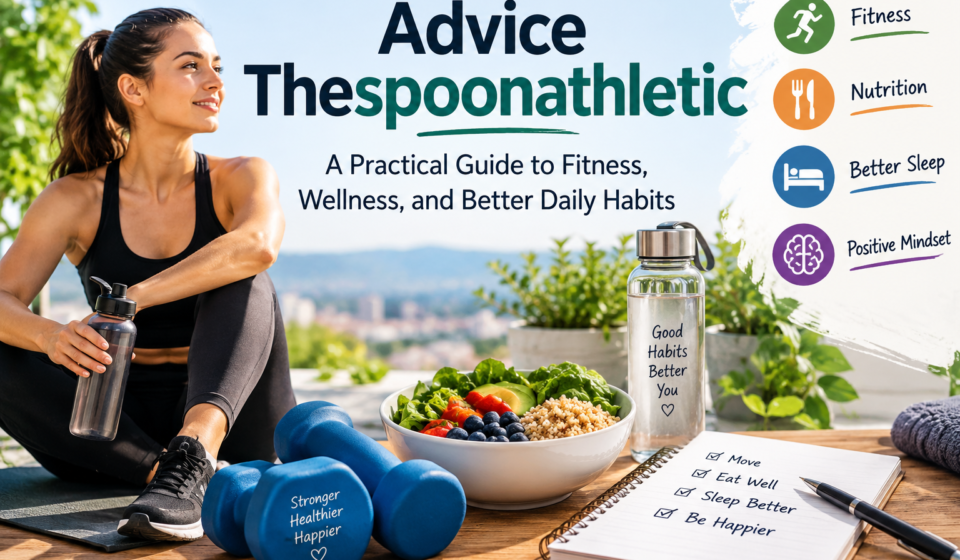

advice thespoonathletic is a phrase associated with practical guidance about fitness, athletic performance, nutrition, recovery, and healthy living. The idea behind this type of advice is simple: lasting health doesn’t come from one difficult workout or a short-term diet. Instead, it grows from small habits repeated consistently over time.
The Spoon Athletic website presents content covering fitness, nutrition, mindset, wellness, recovery, and performance. Its advice generally emphasizes balanced eating, regular movement, hydration, sleep, stress management, and sustainable habits. TheSpoonAthletic
For readers looking for useful fitness information, however, it’s important to separate sensible health principles from exaggerated promises. No single website, exercise, food, or supplement can guarantee perfect health. The strongest approach is to combine reliable fitness principles with realistic goals and, when necessary, advice from qualified health professionals.
This guide explores advice thespoonathletic in a simple and useful way, explaining how beginners, active adults, and athletes can apply these ideas to everyday life.
What Is advice thespoonathletic?
advice thespoonathletic can be understood as a collection of practical fitness and wellness ideas designed to help people become stronger, healthier, and more consistent.
The main concept is not about becoming an athlete overnight. Instead, it focuses on building a lifestyle that supports physical fitness and mental well-being.
The guidance associated with TheSpoonAthletic commonly discusses areas such as:
- Exercise and physical activity
- Strength and conditioning
- Healthy eating
- Hydration
- Sleep and recovery
- Stress control
- Mobility and flexibility
- Athletic performance
- Sustainable lifestyle habits
- General wellness
This broad approach matters because fitness isn’t just about lifting weights or running long distances. A person may exercise every day, for example, but still struggle if they rarely sleep, eat poorly, or remain constantly stressed.
A healthier approach connects these areas rather than treating them as separate problems.
The Main Philosophy Behind advice thespoonathletic
One of the most useful ideas behind advice thespoonathletic is consistency.
Think about it this way: doing one huge workout once a month won’t create the same benefits as moving regularly throughout the week. The same principle applies to food and sleep. A balanced meal today is helpful, but balanced eating over many months is far more meaningful.
A sustainable fitness lifestyle can include:
- Regular physical activity
- Nutritious meals
- Enough water
- Quality sleep
- Rest and recovery
- Stress management
- Realistic personal goals
The Spoon Athletic’s published advice similarly emphasizes healthy eating, regular exercise, sleep, hydration, and controlling stress as connected parts of long-term wellness. The Spoon Athletic
That’s an important lesson for beginners. Fitness doesn’t need to be complicated.
Sometimes, the best plan is the one you can actually follow.
Why Consistency Matters More Than Quick Results
Many people begin exercising with a simple goal: they want results as quickly as possible.
That’s understandable. Who wouldn’t want to see progress immediately?
However, rushing can create problems. A beginner who suddenly trains too hard may become exhausted, overly sore, or discouraged. Someone who follows an extremely restrictive diet may find it difficult to continue for more than a few weeks.
A better strategy is gradual progress.
For example, someone who currently walks for 10 minutes might slowly increase the duration. Someone beginning strength training could learn basic movements before adding heavier resistance.
This approach provides several advantages:
- It makes exercise easier to maintain.
- It gives the body time to adapt.
- It reduces unnecessary pressure.
- It creates confidence.
- It makes progress easier to measure.
In other words, slow progress is still progress.
Building a Balanced Exercise Routine
Exercise is one of the central themes in advice thespoonathletic. A good routine doesn’t necessarily require expensive equipment or a professional gym.
Different forms of movement provide different benefits.
Walking and Light Cardio
Walking is one of the simplest ways to become more active.
It can support cardiovascular fitness while being accessible to many beginners. People can walk outdoors, use a treadmill, or simply add more movement to their normal day.
Other cardio activities include:
- Cycling
- Swimming
- Jogging
- Dancing
- Hiking
- Recreational sports
The best choice is often the activity a person enjoys enough to repeat.
Strength Training
Strength training can help build stronger muscles and support everyday physical ability.
Beginners can start with simple movements such as:
- Squats
- Lunges
- Push-ups
- Rows
- Planks
- Hip hinges
Good technique should come before heavier resistance. If you’re unsure how to perform an exercise safely, working with a qualified trainer can be useful.
Mobility and Flexibility
Mobility work is another valuable part of a complete fitness routine.
Stretching and controlled movement can help people move more comfortably. Mobility exercises can be especially useful before or after certain types of training, although the exact routine should match the person’s activity and needs.
A balanced program therefore shouldn’t focus on only one type of exercise.
Nutrition: Fueling the Body Properly
Food provides the energy and nutrients required for everyday life and physical activity.
TheSpoonAthletic’s advice recommends including foods such as lean proteins, whole grains, healthy fats, fruits, and vegetables. The Spoon Athletic
A simple balanced plate can include:
| Food Group | Examples | Why It Matters |
| Protein | Eggs, fish, beans, chicken, yogurt | Supports muscle and body tissues |
| Whole grains | Oats, brown rice, whole-grain bread | Provides carbohydrates and fiber |
| Vegetables | Spinach, carrots, broccoli | Provides vitamins, minerals, and fiber |
| Fruits | Apples, bananas, oranges, berries | Provides nutrients and natural carbohydrates |
| Healthy fats | Nuts, seeds, olive oil | Supports normal body functions |
| Fluids | Water, milk, other suitable drinks | Supports hydration |
There isn’t a single perfect diet for everyone. Age, activity level, personal preferences, culture, allergies, medical conditions, and goals can all influence nutritional needs.
That’s why extreme food rules aren’t usually necessary.
Hydration Is Easy to Forget
Water may seem like a small detail, but hydration is an important part of everyday wellness.
People lose fluids through normal body functions, exercise, and sweating. Hot weather can also increase fluid needs.
A sensible approach is to drink regularly throughout the day and pay particular attention to hydration during physical activity and hot conditions.
Useful habits include:
- Carrying a reusable water bottle
- Drinking water with meals
- Drinking before and after exercise
- Increasing fluid intake during hot weather
- Paying attention to thirst
- Replacing fluids after heavy sweating
TheSpoonAthletic’s published guidance also highlights increased water intake during exercise or hot weather and encourages limiting sugary drinks. The Spoon Athletic
Of course, people with certain medical conditions may have specific fluid requirements, so professional guidance should take priority.
Sleep and Recovery Are Part of Training
Here’s a point that people sometimes overlook: rest is not wasted time.
The body needs recovery after physical activity. Sleep is especially important because it supports normal physical and mental functions.
Someone can have an excellent workout plan, but poor sleep can make it harder to feel energetic and perform well.
Good sleep habits can include:
- Keeping a regular sleep schedule
- Creating a comfortable sleeping environment
- Limiting stimulating screen use before bed
- Avoiding unnecessary late-night interruptions
- Allowing enough time for sleep
- Keeping the bedroom comfortable and quiet
The published Advice Guide TheSpoonAthletic also emphasizes consistent sleep times and reducing screen use before bed. The Spoon Athletic
Recovery isn’t only about sleeping. Rest days, lighter training sessions, nutritious meals, hydration, and managing training volume all contribute to recovery.
Managing Stress for Better Wellness
Fitness doesn’t happen only in the muscles.
The mind matters, too.
Long periods of stress can make healthy routines harder to maintain. People may lose motivation, sleep poorly, eat irregularly, or stop exercising when life becomes overwhelming.
That’s why stress management belongs in a complete wellness plan.
Simple strategies may include:
- Taking short breaks during work
- Spending time outdoors
- Talking with friends or family
- Practicing slow breathing
- Enjoying hobbies
- Walking for relaxation
- Organizing daily responsibilities
- Taking time away from screens
The goal isn’t to eliminate every stressful moment. That’s impossible. Instead, the goal is to develop healthy ways of responding to stress.
advice thespoonathletic for Beginners
Beginners don’t need an advanced training program.
In fact, starting too aggressively can make exercise feel miserable.
A beginner-friendly approach could look like this:
Start small. Begin with manageable activity.
Learn technique. Understand basic movements before increasing difficulty.
Create a schedule. Choose realistic days and times for exercise.
Track progress. Record workouts, walking time, or other simple measures.
Recover properly. Give your body time to adapt.
Stay patient. Physical changes often take time.
The most important question isn’t, “How quickly can I get fit?”
A better question is, “What healthy habits can I maintain for the next year?”
That change in thinking can make fitness much less stressful.
advice thespoonathletic for Athletes

Athletes have different demands from casual exercisers, but the fundamentals remain important.
Performance depends on more than training harder.
Athletes should consider:
- Training quality
- Recovery
- Nutrition
- Hydration
- Sleep
- Mobility
- Mental preparation
- Injury prevention
- Competition schedules
An athlete who trains intensely every day without adequate recovery may eventually struggle with fatigue or declining performance.
This is where planning becomes important.
Training should have a purpose. Hard sessions, lighter sessions, technical practice, and rest can all have a place.
As the saying goes, you can’t drive a car at full speed forever without eventually needing to stop at the service station.
The same basic idea applies to the human body.
Avoiding the “More Is Always Better” Trap
Fitness culture sometimes creates the impression that more exercise automatically means better results.
That’s not always true.
More weight, more miles, more workouts, or fewer calories aren’t automatically better.
Progress should be appropriate for the individual.
For example, increasing training difficulty gradually can be more useful than suddenly doubling workout volume.
People should also pay attention to warning signs such as unusual pain, persistent exhaustion, dizziness, or a significant decline in performance. These aren’t challenges to simply “push through.” Depending on the situation, professional medical or sports advice may be appropriate.
Supplements: Use Common Sense
Supplements receive plenty of attention in fitness culture.
However, a supplement isn’t a replacement for good nutrition, sleep, or training.
Before using a supplement, consider:
- Why do you need it?
- Is there evidence supporting its use?
- Could it interact with medication?
- Is the product from a trustworthy source?
- Is the dosage appropriate?
- Does a qualified professional recommend it?
Some people may benefit from specific supplements because of dietary needs or medical reasons. Others may not need them at all.
Therefore, supplement decisions should be made carefully rather than based only on social media trends.
Creating a Simple Weekly Fitness Plan
A basic weekly plan can help turn good intentions into action.
Here’s an example:
| Day | Main Activity | Additional Focus |
| Monday | Strength training | Mobility |
| Tuesday | Walking or cardio | Hydration |
| Wednesday | Light activity | Recovery |
| Thursday | Strength training | Stretching |
| Friday | Cardio or sport | Mobility |
| Saturday | Outdoor activity | Relaxation |
| Sunday | Rest or gentle movement | Recovery |
This is only an example, not a universal prescription.
Someone with a demanding job may need a different schedule. An athlete may train much more. A beginner may need fewer sessions.
The key idea is flexibility.
A good fitness routine should fit real life rather than forcing real life to fit an impossible routine.
How to Measure Progress
The scale isn’t the only way to measure improvement.
Fitness progress can also appear through:
- Better stamina
- Increased strength
- Improved balance
- Greater flexibility
- Better sleep
- More daily energy
- Improved exercise technique
- Faster recovery
- Greater confidence
- More consistent habits
For example, someone who couldn’t walk comfortably for 20 minutes but can now walk for 40 minutes has made meaningful progress, even if their weight hasn’t changed.
That’s why a broader view of health can be more motivating.
Common Mistakes People Should Avoid
Even a good fitness plan can fail when basic mistakes get in the way.
Doing Too Much Too Soon
Beginners sometimes try to copy advanced athletes.
That usually isn’t necessary. The body needs time to adapt.
Ignoring Recovery
Training every day at maximum intensity can make recovery difficult.
Rest isn’t laziness.
Following Extreme Diets
Very restrictive eating plans may be difficult to maintain and can create nutritional problems.
Comparing Yourself With Others
Everyone begins from a different place.
Comparing your chapter one with someone else’s chapter twenty isn’t exactly fair.
Chasing Every Fitness Trend
New workouts and products appear constantly.
Some are useful. Others are simply marketing.
Focus on fundamentals first.
The Importance of Evidence and Professional Guidance
One of the most important lessons when reading online fitness material is to evaluate information carefully.
The Spoon Athletic contains broad wellness guidance, but readers should still distinguish between general educational content and individualized medical advice.
A qualified doctor, registered dietitian, physiotherapist, or certified fitness professional can provide personalized guidance when circumstances require it.
This becomes especially important for people who:
- Have a medical condition
- Are recovering from an injury
- Are pregnant
- Take prescription medication
- Have specific nutritional requirements
- Are training at a high competitive level
- Experience unexplained pain or serious symptoms
Online information can educate you, but it shouldn’t replace professional care when professional care is needed.
Can advice thespoonathletic Support a Healthy Lifestyle?
Yes, the general principles associated with advice thespoonathletic can support a healthy lifestyle when they’re used sensibly.
The strongest themes are straightforward:
- Move regularly.
- Eat a balanced diet.
- Drink enough fluids.
- Sleep well.
- Manage stress.
- Recover between demanding workouts.
- Set realistic goals.
- Stay consistent.
These aren’t magic tricks.
And that’s actually a good thing.
Healthy living doesn’t need to depend on complicated secrets. Basic habits, repeated consistently, can form a strong foundation.
How to Make Fitness a Long-Term Lifestyle
The biggest challenge isn’t usually knowing what to do.
It’s continuing to do it.
To make healthy habits last, start with realistic targets.
Instead of saying:
“I’ll exercise two hours every day.”
Try:
“I’ll walk for 20 minutes on four days this week.”
Instead of:
“I’ll never eat unhealthy food again.”
Try:
“I’ll make most of my meals balanced and enjoy occasional treats without guilt.”
This mindset creates flexibility.
Life isn’t perfectly predictable. Work gets busy. Families need attention. Travel happens. Some days simply don’t go according to plan.
A sustainable fitness lifestyle allows you to return to your routine after interruptions.
The Role of Mindset in Athletic Success
Physical ability matters, but mindset also plays a major role in long-term progress.
A positive fitness mindset doesn’t mean pretending everything is easy.
It means understanding that challenges are normal.
An athlete may lose a competition. A beginner may miss a workout. Someone may have a week of poor eating.
That doesn’t mean the entire plan has failed.
The better response is to learn, adjust, and continue.
This is one of the most valuable ideas readers can take from advice thespoonathletic: progress isn’t a straight line.
There will be good days and bad days.
Keep moving forward.
A Practical Checklist for Everyday Wellness
For readers who want something simple, the following checklist can help:
Daily
- Drink water regularly.
- Eat a variety of nutritious foods.
- Move your body.
- Take breaks from long periods of sitting.
- Make time for relaxation.
- Aim for sufficient sleep.
Weekly
- Include strength-based activity.
- Include cardiovascular activity.
- Review your progress.
- Plan meals where helpful.
- Schedule recovery time.
- Adjust your routine if necessary.
Long Term
- Set realistic goals.
- Learn proper exercise techniques.
- Avoid extreme approaches.
- Seek professional advice when needed.
- Focus on consistency.
- Celebrate improvements beyond appearance.
Frequently Asked Questions About advice thespoonathletic
What does advice thespoonathletic mean?
It refers to practical fitness and wellness guidance associated with TheSpoonAthletic, including exercise, nutrition, recovery, hydration, sleep, stress management, and healthy lifestyle habits.
Is advice thespoonathletic suitable for beginners?
The general principles can be useful for beginners because they emphasize basic habits such as regular activity, balanced nutrition, hydration, and recovery. Beginners should still adapt exercise intensity to their own abilities.
Does fitness require a gym?
No. Walking, bodyweight exercises, cycling, swimming, and many other activities can contribute to physical fitness.
Is diet more important than exercise?
Both matter, but their roles are different. Nutrition provides energy and nutrients, while physical activity supports cardiovascular fitness, strength, mobility, and overall health.
How quickly will fitness results appear?
Results vary widely. Factors include starting fitness level, training, nutrition, sleep, age, genetics, and consistency. Sustainable progress usually takes time.
Should everyone take supplements?
No. Supplements aren’t automatically necessary. Their usefulness depends on individual needs, diet, health circumstances, and professional advice.
Is rest important for athletes?
Absolutely. Recovery is an important part of training and helps athletes manage the demands of physical activity.
Final Thoughts on advice thespoonathletic
advice thespoonathletic represents a useful way to think about fitness as a complete lifestyle rather than a short-term challenge. Exercise matters, but so do nutritious food, hydration, sleep, recovery, stress management, and a positive mindset.
The most practical lesson is simple: don’t try to transform everything overnight.
Start with one habit. Make it consistent. Then build from there.
Whether you’re a beginner taking your first walks, an experienced athlete preparing for competition, or simply someone trying to feel healthier, the fundamentals remain surprisingly similar. Move regularly, fuel your body wisely, recover properly, and give yourself enough time to improve.
Ultimately, advice thespoonathletic is most valuable when its ideas are approached with balance, realistic expectations, and sound judgment. Fitness isn’t about perfection; it’s about creating habits that make your body stronger, your mind more resilient, and your everyday life healthier.
Stay in touch to get more updates & news on Trend Info Here!


